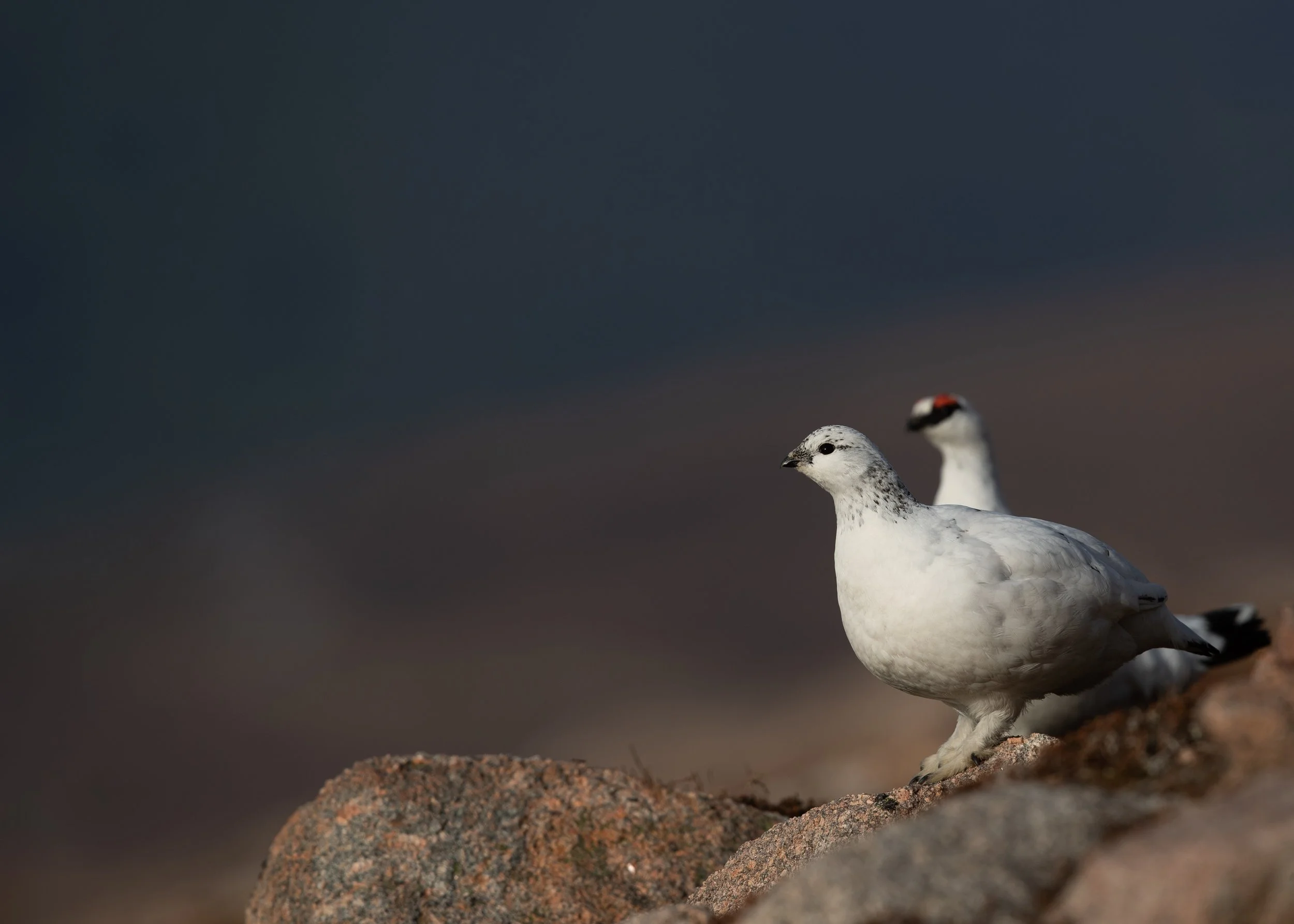
Ptarmigan
Bound to the open, windswept landscapes of tundra-like environments, the Ptarmigan Lagopus muta finds its British sanctuary high in the Scottish mountains, where cold air and sparse vegetation still echo the conditions of its broader Arctic range.
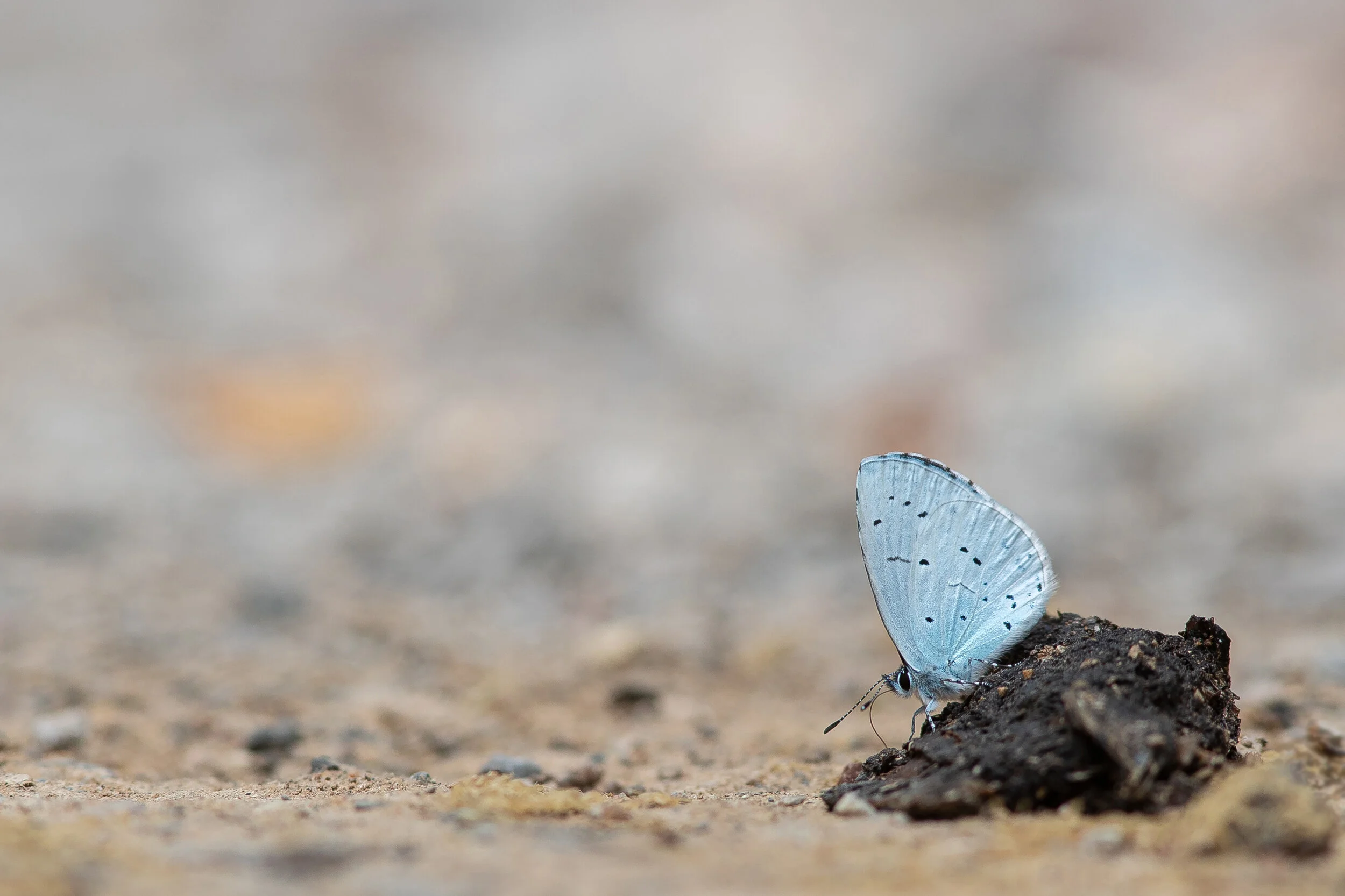
Come dine with me …
As with most insects, butterflies do the majority of their growing and eating during the larval stage. Nevertheless, the adults still require nutrition.
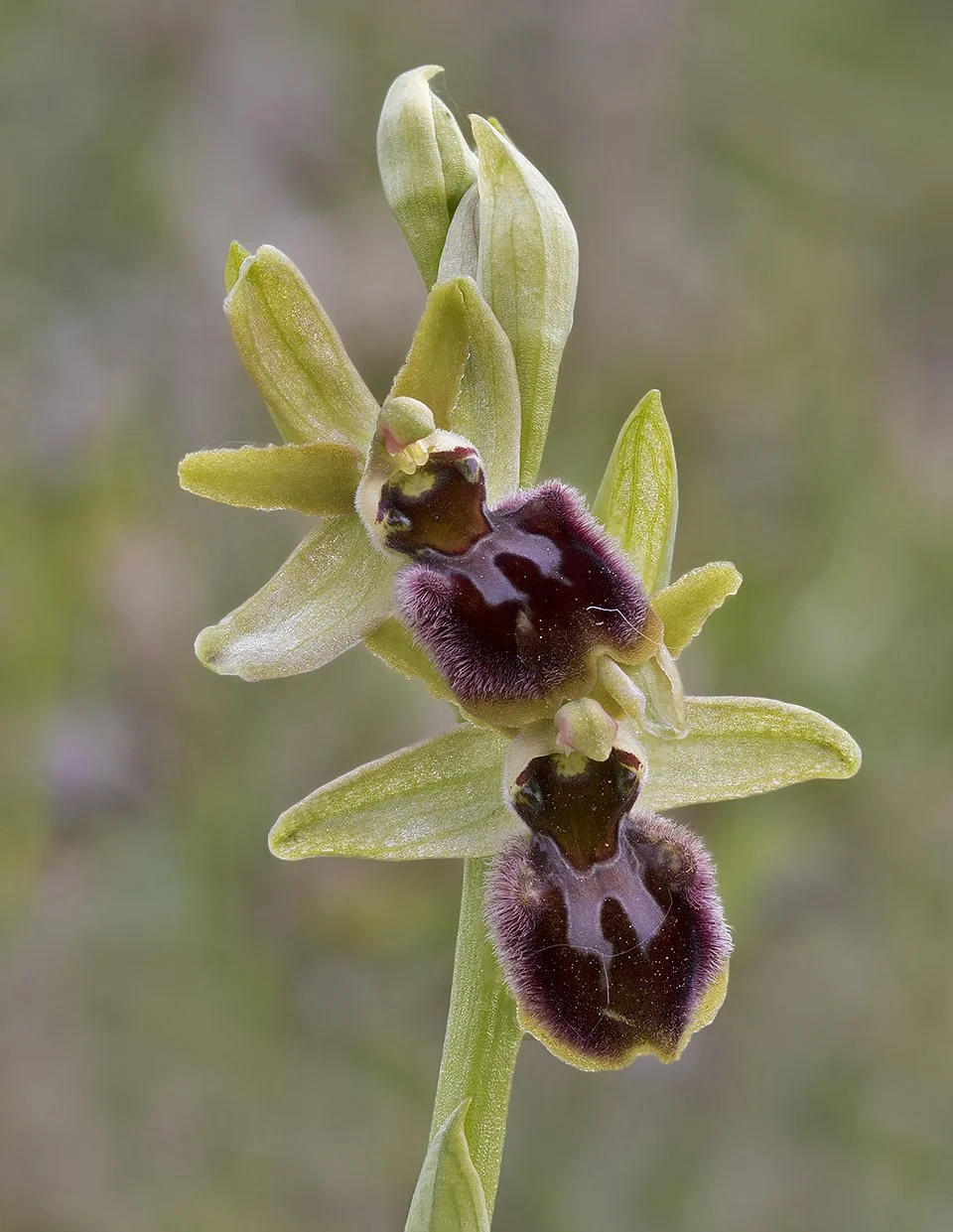
Arachnophobia
The Early Spider-orchid Ophrys sphegodes is a local and uncommon species. However, in the limited areas where it can be found, including the coastal regions of southern England, especially Kent, Sussex and Dorset, populations can be quite substantial.

Piggyback
Fairly widespread but uncommon throughout Britain and Ireland, because of their diminutive size and behaviour of fruiting within decaying fungi that themselves are unlikely to grab the attention, Asterophora lycoperdoides, the Powdery Piggyback, and A. parasitica, the Silky Piggyback, are easily overlooked.

Mycena seynii …
M. seynesii (seynii) is a rarely recorded, small to medium sized, chestnut-brown to purplish-brown Mycena.

Beauty in many forms …
The Bearded Tooth, Hericium erinaceus is surely one of the most striking and beautiful of all British woodland fungi.

Autumn equinox …
As the season changes from summer to autumn, the days shorten, the temperature drops and the sun rests low in the sky. It is a time of year that I particularly like as the trees start to whisper to one another in the breeze, and their leaves turn from green to many shades of gold. It is of course not only the trees that provide this multitude of colour.

Winter retreat …
Post mating, the female Wasp Spider, Argiope bruennichi weaves in the region of five flask-shaped egg cocoons, typically containing several hundred eggs, in the higher parts of the vegetation.

Last orders please …
A tree, by its very nature, is a closed hydraulic system. Water is absorbed from the soil via the roots during a process called osmosis and it moves through the plant to the leaves where a small quantity is combined with carbon dioxide and made into sugars by a procedure known as photosynthesis.

Genetic engineering …
European butterflies are arguably the best-studied group of invertebrates in the world. Uncovering cryptic biodiversity is essential for understanding evolutionary processes and patterns of ecosystem functioning, as well as for nature conservation.

A case of mistaken identity …
When out and about I often hear comment from inexperienced observers on the difficulty in separating the Brown Argus, Aricia agestis (Lepidoptera: Lycaenidae) from the ‘brown’ form of the female Common Blue, Polyommatus icarus (Lepidoptera: Lycaenidae) in both field and photographic situations.

Getting your eye in …
Found solitary or in small groups on the fallen male catkins of the Common Alder, Alnus glutinosa or willows, Ciboria caucus is a widespread species though one that is easily overlooked due to its small size and wet habitat.

Signs of Spring
Although widespread, Encoelia furfuracea (Helotiales: Sclerotiniaceae) is generally regarded as an uncommon find in Britain.

Sweet smell of decay …
The Common Stinkhorn, Phallus impudicus is the commonest of the British stinkhorns, with a smell that is typically detected long before the fungus is actually found.

Beauty and the beech …
Although their appearance might suggest that slime moulds are fungi, they are neither fungi nor moulds; though they often form spore-bearing structures that resemble those of true fungi.

Coeur de Sorcière
Rarely seen in Britain, the Red Cage, Clathrus ruber is a striking and unforgettable species, which was first recorded in Britain from the Isle of Wight in 1844.

A bird in the bush …
The funnel-shaped fruitbodies of Cyathus striatus are always a pleasure to find. However, although often clustered in large groups, they are easily overlooked because they are small and inconspicuous and because their habitat is typically dark, damp woodland.

Prima ballerina …
The balletic and rather beautiful Silky Rosegill is an infrequent to rare find in Britain and Ireland.

Alien invader …
The aptly named Devil’s Fingers, only rarely seen in southern Britain, is a striking species, which reached Europe from Australia or New Zealand at the start of World War I (1914). It was first recorded in Britain from Cornwall in 1946.
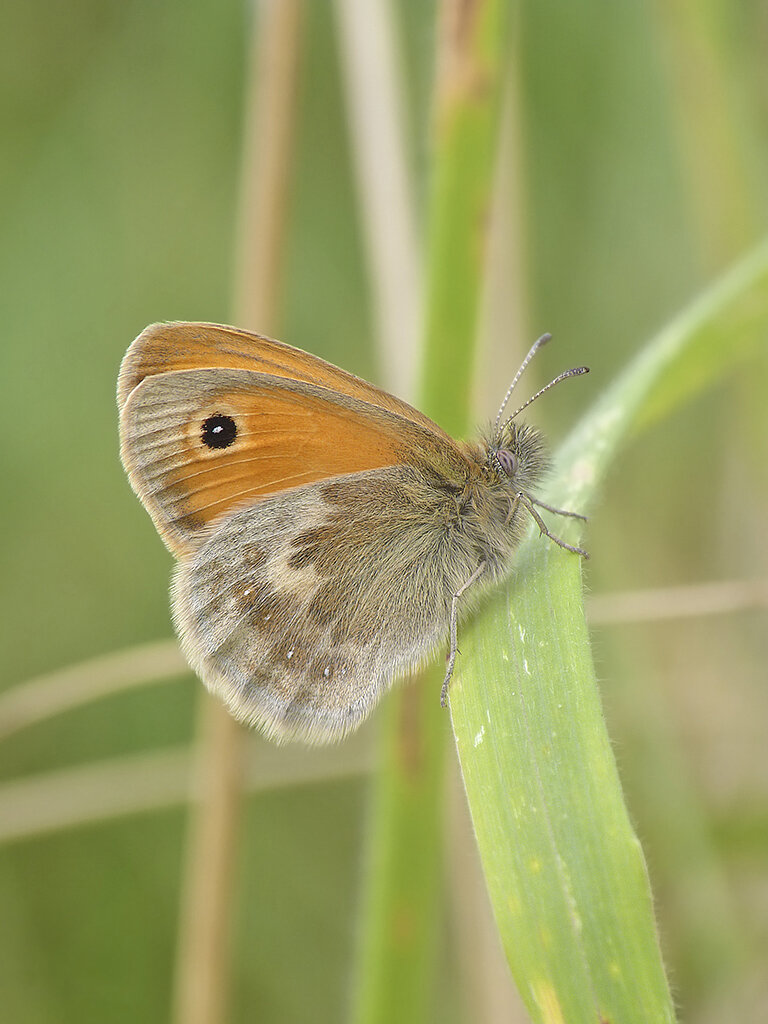
Selvedg'd Heath Eye (Petiver, 1717)
Despite its contemporary British vernacular name, the Small Heath is not confined to heathland and can be found in a wide range of habitats particularly those that are more open in structure, such as grassland, heathland, railway embankments, disused quarries, meadows and coastal dunes. It occurs only sparingly in woodland where it can be found in ones and twos along wide woodland rides.

Fairies do live in the woods
The Green Long-horn, Adela reaumurella is a small day-flying micromoth belonging to the family Adelidae, the fairy longhorn moths.