Platystomos albinus
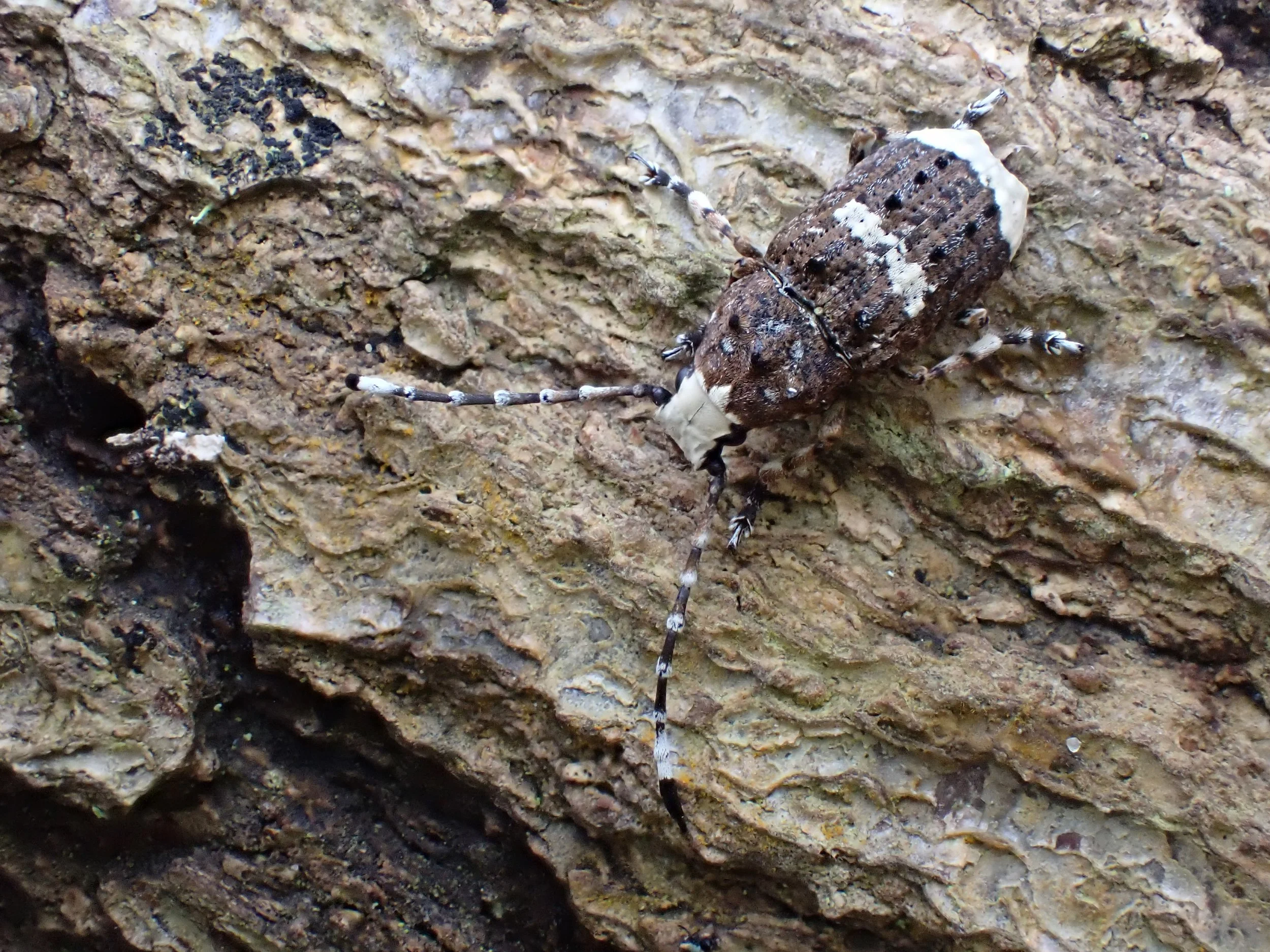
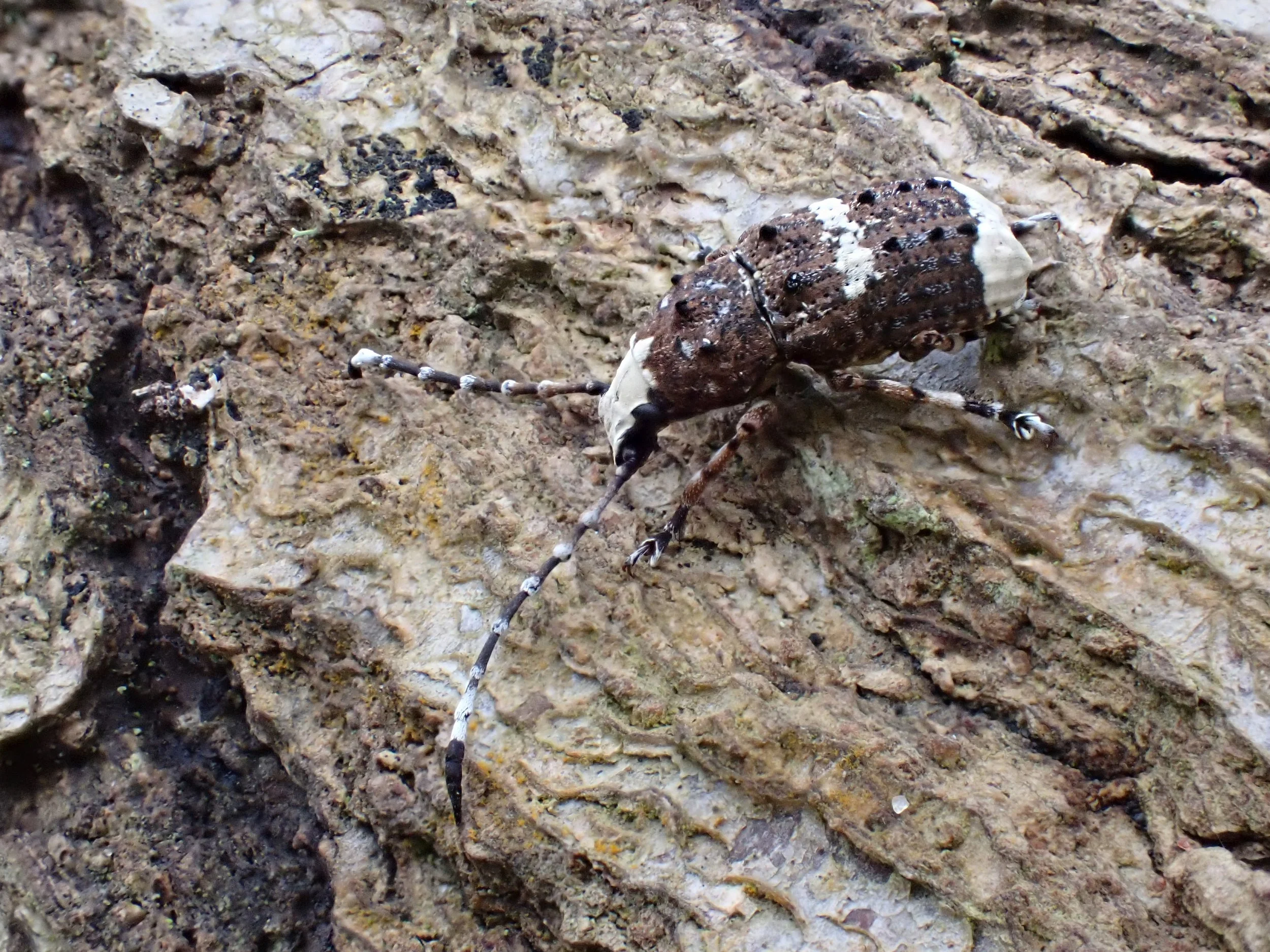
Platystomos albinus, a fungus beetle in the Anthribidae family, is classified as nationally scarce (Nb) and recognised as an Index of Ecological Continuity species. It is strongly associated with long-established woodland, particularly ancient or semi-natural sites that support a continuous supply of deadwood and fungi. In Britain, it is recorded mainly from southern and central England, with only a few records from Wales.
In the UK, it is closely linked to decaying broadleaved trees such as alder, beech and oak where bracket fungi develop on fallen timber or standing deadwood. Adults are found on fungal fruiting bodies, especially polypores, where they feed and reproduce, favouring humid, shaded woodland interiors and rarely occurring in managed or recently disturbed habitats lacking fungal growth.
Its life cycle is closely tied to fungal availability. Eggs are laid within or near fungal tissue, and the larvae develop concealed within, feeding on mycelium and spore-producing structures. Development may take several months depending on environmental conditions and the persistence of the host fungus, with pupation occurring within the fungus or nearby decayed wood.
Adults are small, 7 to 10 mm, and cryptically coloured, typically mottled with pale grey or whitish scales on a darker brown background, providing camouflage against bark and fungi. Markings are sometimes faint or absent. Males have antennae about as long as the body, while those of females are shorter.