Sorbus arvonicola
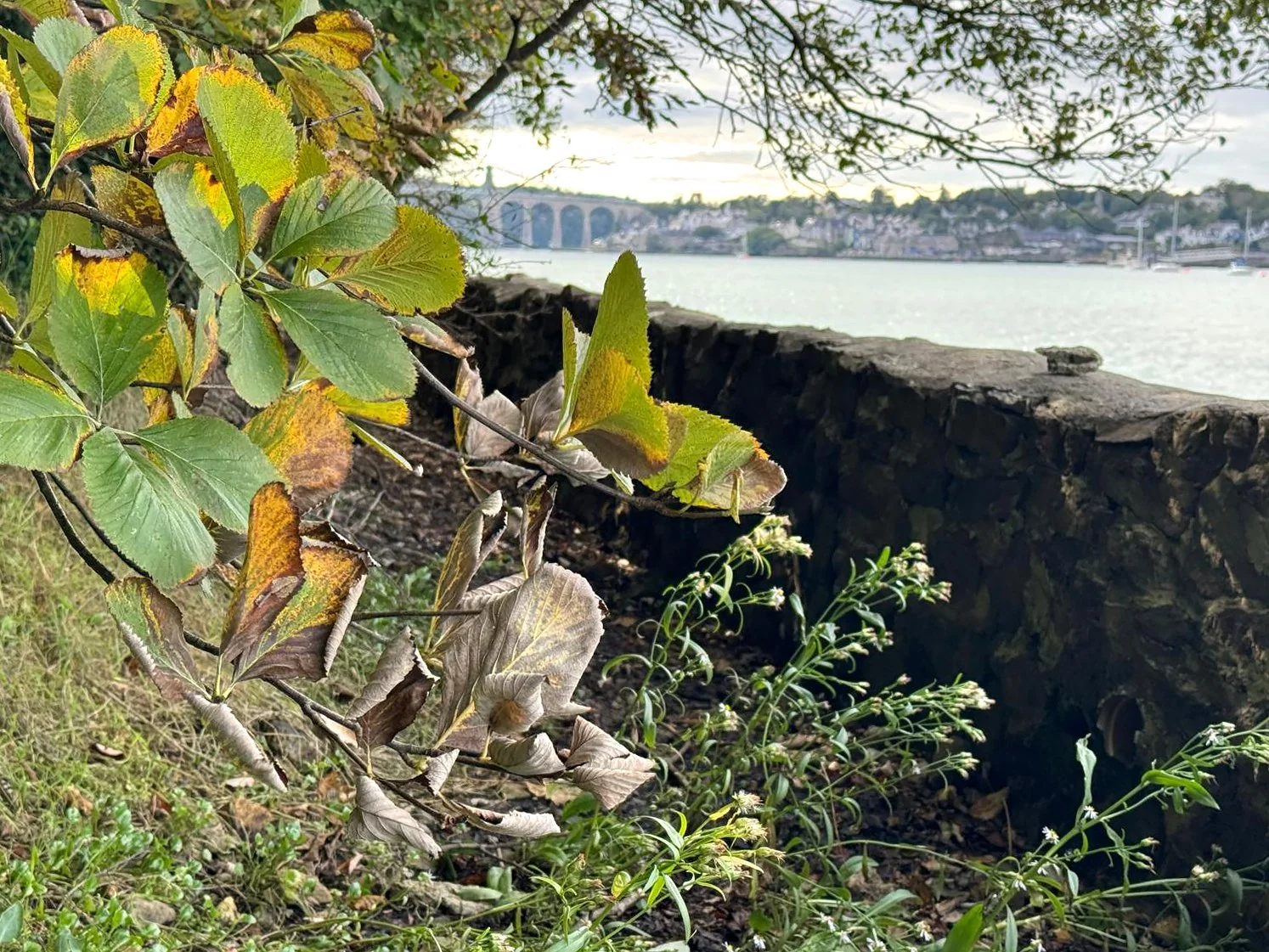
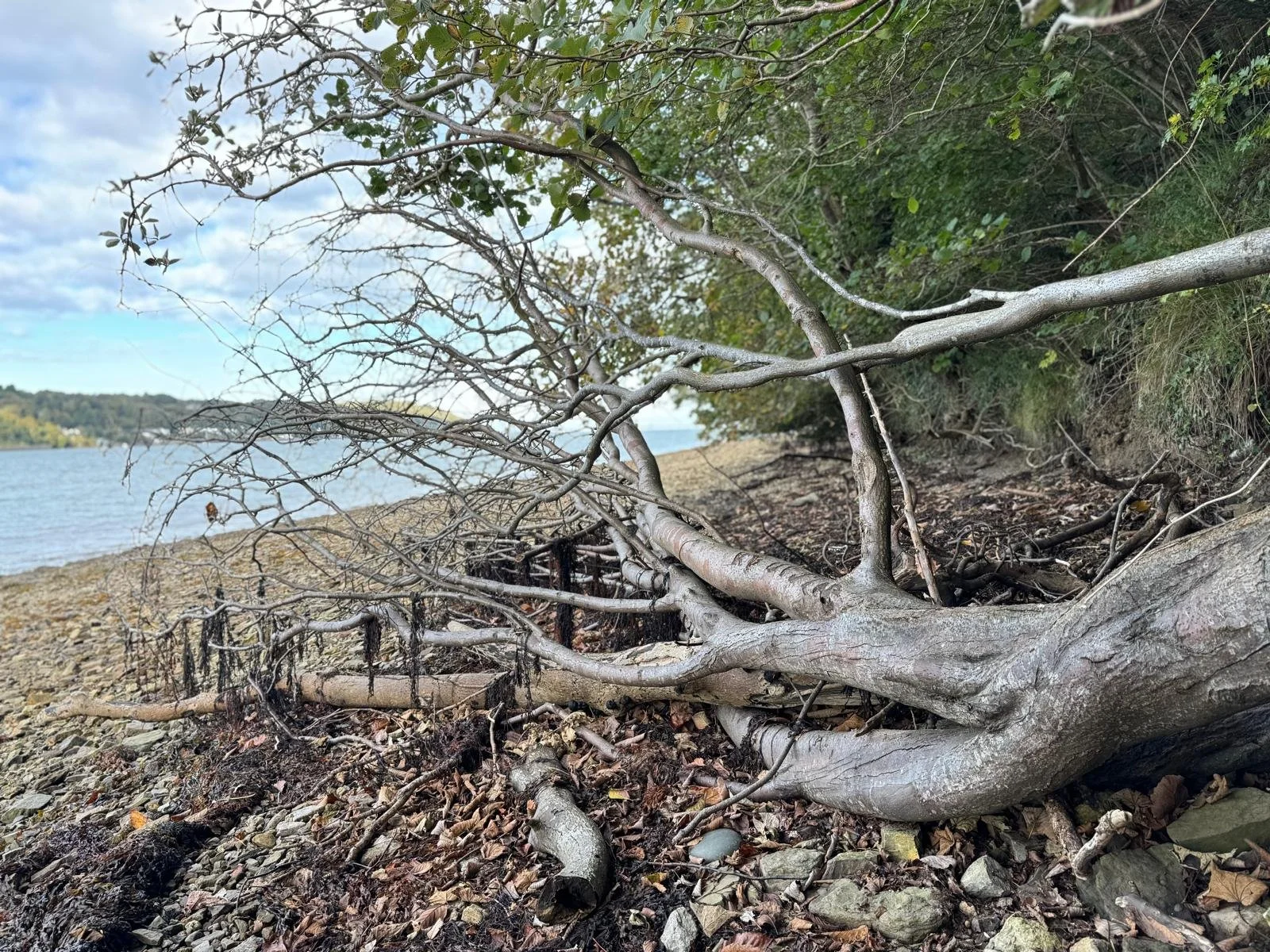
Along the narrow tidal margins of the Menai Strait, the rare Menai Strait Whitebeam Sorbus arvonicola persists in a habitat that seems, at first glance, inimical to tree life. This Welsh endemic is confined to an extraordinarily small range, little more than a fragment of coastline, centred on Nantporth Nature Reserve. Here, land and sea are in constant battle. Individuals often occupy the upper edge of the intertidal zone, where their roots are exposed to air, threaded through unstable shingle, or intermittently submerged beneath saline waters during high tides. Such conditions impose physiological stresses including salt exposure, mechanical disturbance, and nutrient limitation, that few members of the genus Sorbus would ordinarily tolerate.
Morphologically, the species bears the hallmarks of its lineage: leaves with a pale, often silvery underside that catches the coastal light, and clusters of small pomes that sustain local bird populations. Its stature is modest, frequently shaped by wind into asymmetrical or stunted forms that echo the direction of prevailing winds.
Ecologically, the Menai Strait provides a uniquely moderated environment. Its sheltered waters and calcareous substrates create conditions that favour whitebeam establishment, while its tidal rhythms impose a cyclical disturbance regime. In this transitional space, neither fully terrestrial nor wholly marine, Sorbus arvonicola endures. The periodic retreat of the tide reveals more than the shoreline; it discloses the hidden architecture of survival, where roots cling and probe through shifting stones, anchoring life against the slow insistence of the sea.
Yet this resilience is not without limits. With so few individuals confined to such a restricted area, the species remains acutely vulnerable to coastal erosion, rising sea levels, and human disturbance. Its continued existence depends upon careful stewardship, including that of organisations such as the North Wales Wildlife Trust. There is something quietly arresting in encountering this tree in situ: a botanical singularity, holding its ground at the threshold of land and water, where each ebbing tide briefly grants passage into its fragile and enduring world.