Shifting sands …
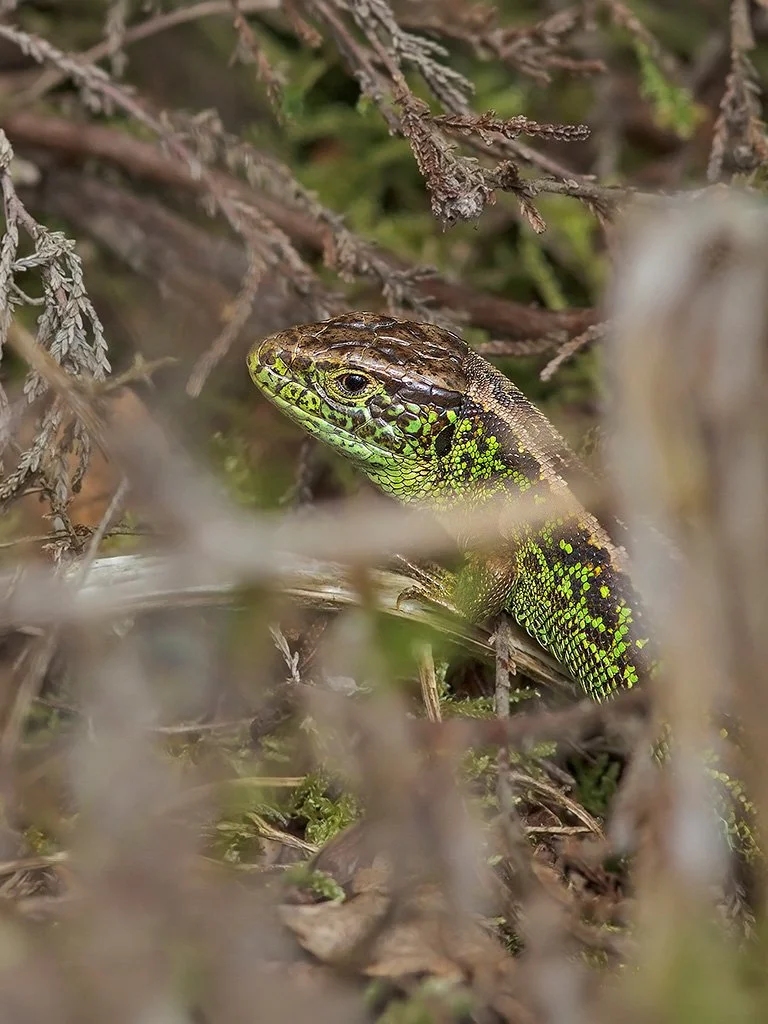
The Sand Lizard Lacerta agilis is one of the UK’s rarest native reptiles, largely due to significant historical habitat loss. Today, its natural populations are restricted to protected sandy heathlands in Surrey, Dorset and Hampshire, as well as coastal sand dune systems in Merseyside. Conservation efforts, including captive breeding programmes, have enabled successful reintroductions to parts of its former range, such as North and West Wales, Devon, Cornwall, Kent and West Sussex. The species is fully protected under British and European law, making it illegal to harm the animals or damage their habitats.
Males are particularly striking in spring, developing a vivid green colouration after emerging from hibernation between late March and April. This bright colouring is associated with the breeding season, which typically takes place from May to June, when males compete for and court females.
A key biological feature of the Sand Lizard in the UK is that it is the only native lizard species to lay eggs (oviparous), rather than giving birth to live young. Females lay their eggs in burrows they dig into loose, sun-warmed sand. These warm conditions are essential for proper incubation and development, making suitable sandy habitats critical to the species’ survival.
Ongoing conservation management remains essential for the Sand Lizard’s future in the UK. Protecting and restoring heathland and dune ecosystems, alongside carefully managed reintroduction programmes, has helped stabilise some populations. However, the species remains vulnerable, and its limited distribution highlights the importance of continued habitat protection and legal safeguards.
References:
https://www.arc-trust.org/sand-lizard [Accessed, 12th April 2026].