Precious metal …
The Large Skipper Ochlodes sylvanus is most often associated with sheltered grassland habitats where a relatively tall, tussocky sward is allowed to develop. Typical sites include species-rich meadows, hedgerows, roadside verges, woodland rides and clearings, as well as certain urban green spaces such as parks and churchyards. Adults are frequently observed basking on broad leaves or making short, darting flights low through the surrounding vegetation.
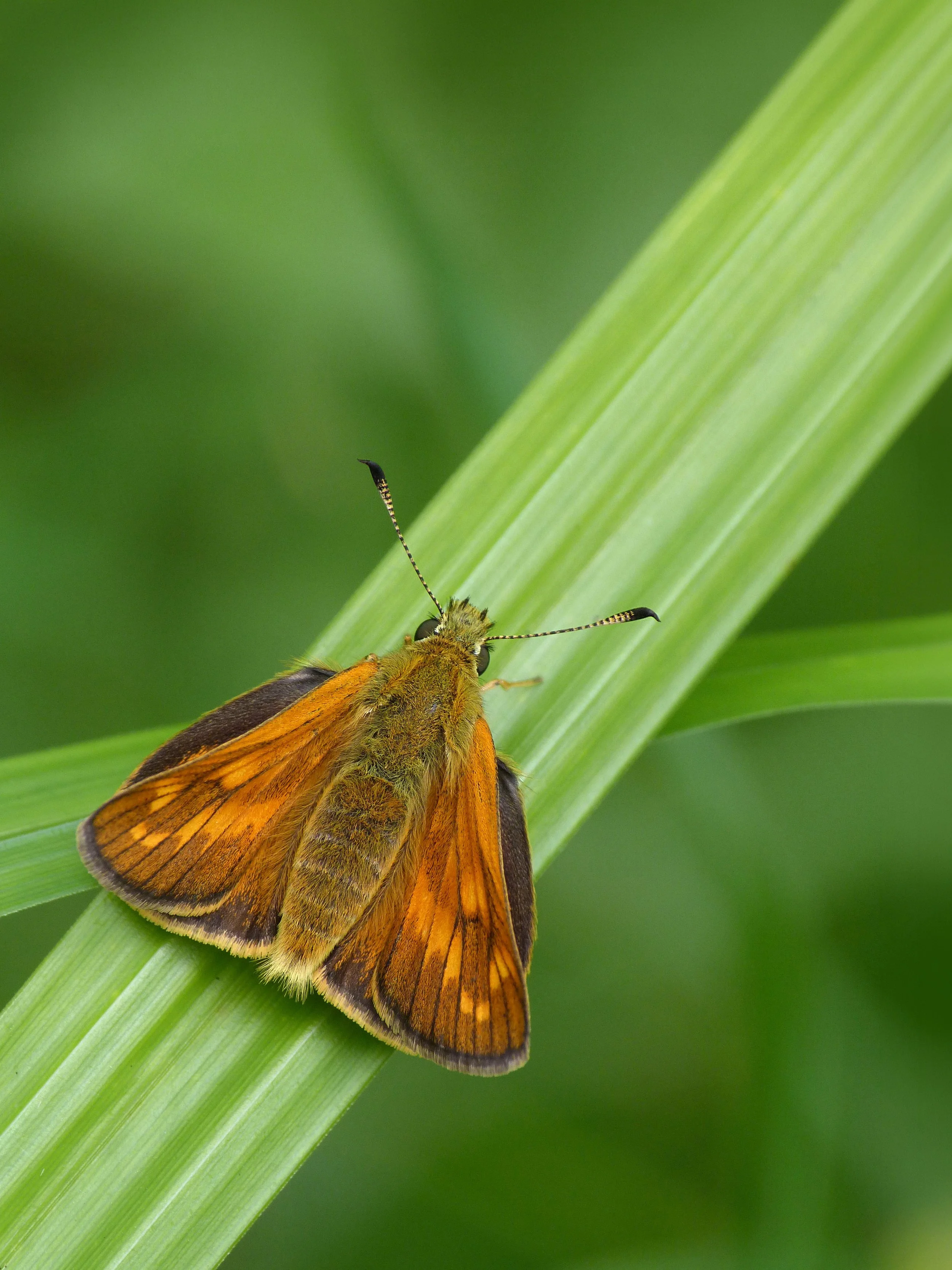
Males exhibit a distinct daily behavioural pattern. During the early morning and later afternoon, they tend to perch in sunlit positions, often on leaves around 0.5–1 metre above ground level, using these vantage points to survey their surroundings. In contrast, the late morning period is more commonly associated with patrolling behaviour, with males flying along linear features such as ride edges or hedgerows. When perching, males are strongly territorial and will actively pursue and investigate other butterflies entering their chosen area.
As one of the larger “golden skippers” in Britain, the species is readily identifiable. Males possess a prominent dark sex brand on the forewing, composed of specialised androconial scales. These structures release pheromones that play a key role in courtship, with pheromone output and mating success generally declining with age.
In Sussex, O. sylvanus is widespread and locally common, particularly across the South Downs and the Weald. It favours unimproved or lightly managed grasslands and well-structured woodland rides, where larval foodplants are abundant. The larvae feed primarily on coarse grasses, especially Cock’s-foot Dactylis glomerata and Yorkshire-fog Holcus lanatus, both of which are widespread in the county. The species is frequently encountered along chalk downland margins, sunny woodland clearings, and field edges where a varied sward structure is maintained through appropriate management.
Adults are univoltine, typically flying from June through July and sometimes into early August, forming a characteristic component of Sussex’s mid-summer butterfly fauna.
References:
https://www.ukbutterflies.co.uk/species.php?species=sylvanus [Accessed, 11th April 2026].