Now you see me …

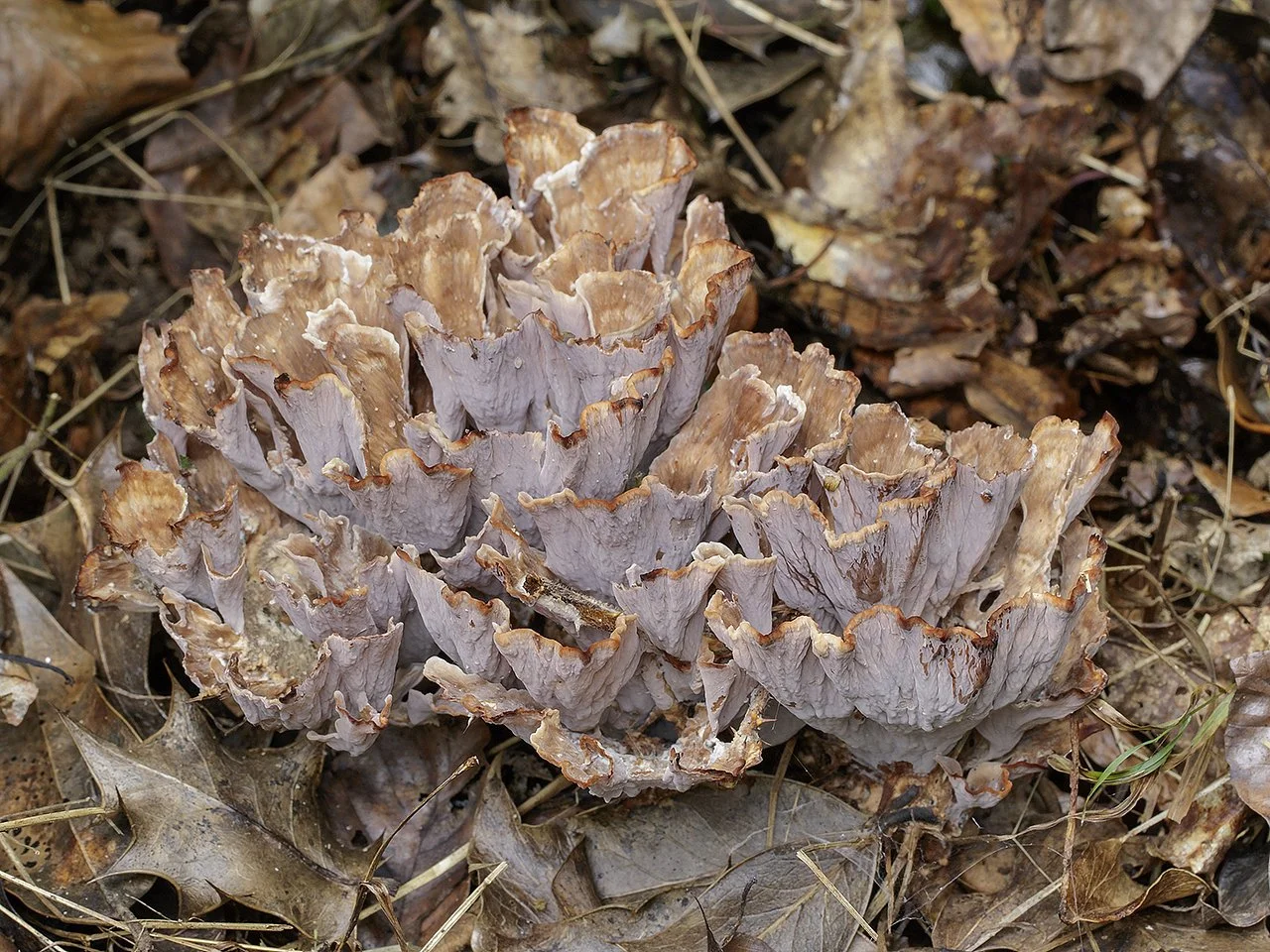
Although widespread in parts of southern England, the Zoned Rosette Podoscypha multizonata remains an elusive and infrequently recorded fungus, its rosette-like, banded brackets blending almost perfectly with leaf litter and the muted colours of the forest floor. This camouflage, coupled with its preference for deep, undisturbed shade, helps explain its apparent rarity.
Strongly associated with ancient woodland, ecosystems shaped over centuries, it parasitises the living roots of broad-leaved trees, especially oak, drawing sustenance from the quiet complexity of the underground network. As ancient woodland has declined across Europe, so too have the specialised species that depend upon its long continuity.
Remarkably, nearly half of Europe’s population of P. multizonata persists in the United Kingdom, placing on Britain a particular responsibility for its future. Recognised as a UK BAP priority species, it stands as a subtle but evocative emblem of the hidden biodiversity that vanishes when old forests fall silent.
References:
Buczacki, S., Shields, C. and Ovenden, D. (2012). Collins Fungi Guide: The most complete field guide to the mushrooms and toadstools of Britain & Ireland. London: HarperCollins, p. 550, fig. p.551.
Phillips, R. (2006). Mushrooms. London: Pan Macmillan, p. 303, fig. d.
Sterry, P. and Hughes. B. (2009). Collins Complete Guide to British Mushrooms and Toadstools. London: HarperCollins, p. 288, fig. p. 289.
https://jncc.gov.uk/our-work/uk-bap-priority-species/ [Accessed, 4th December 2025].