Forest whispers …


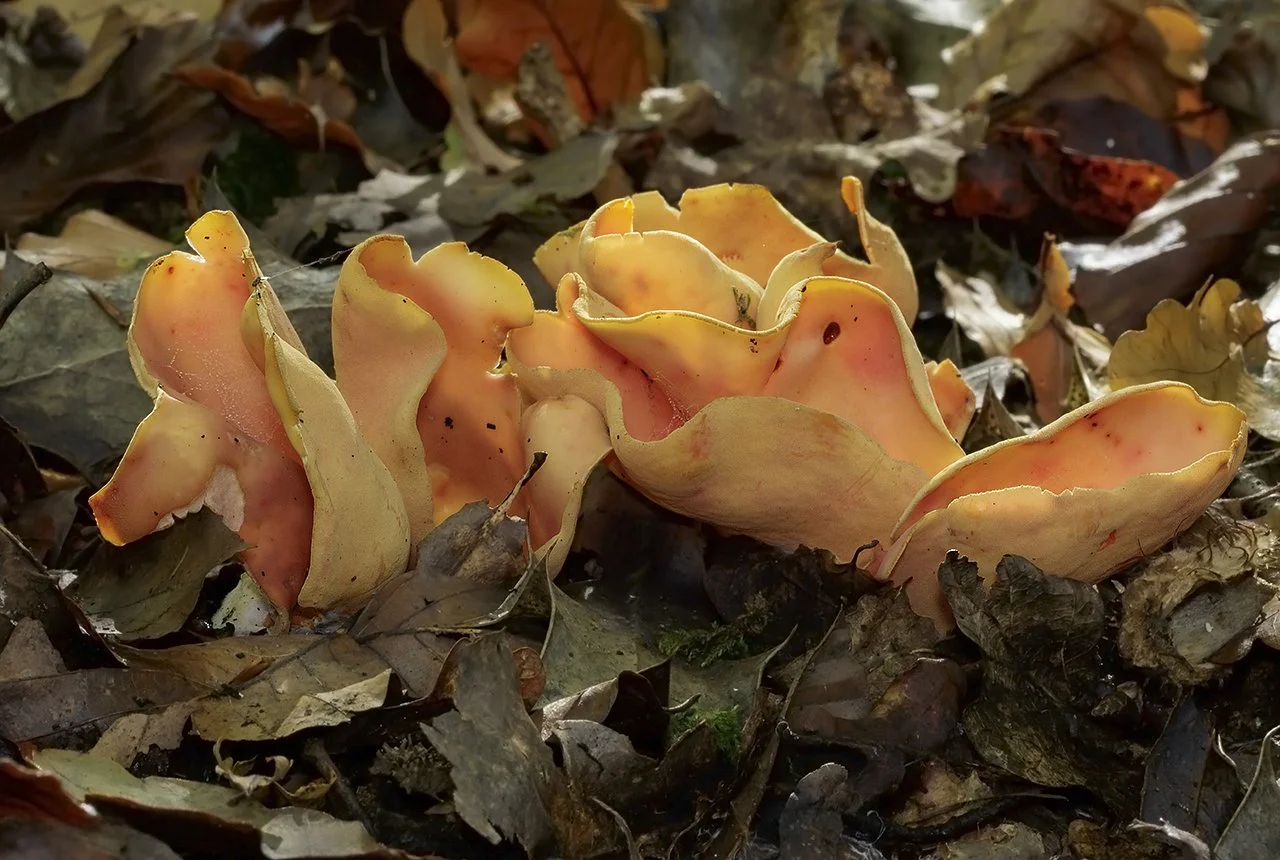
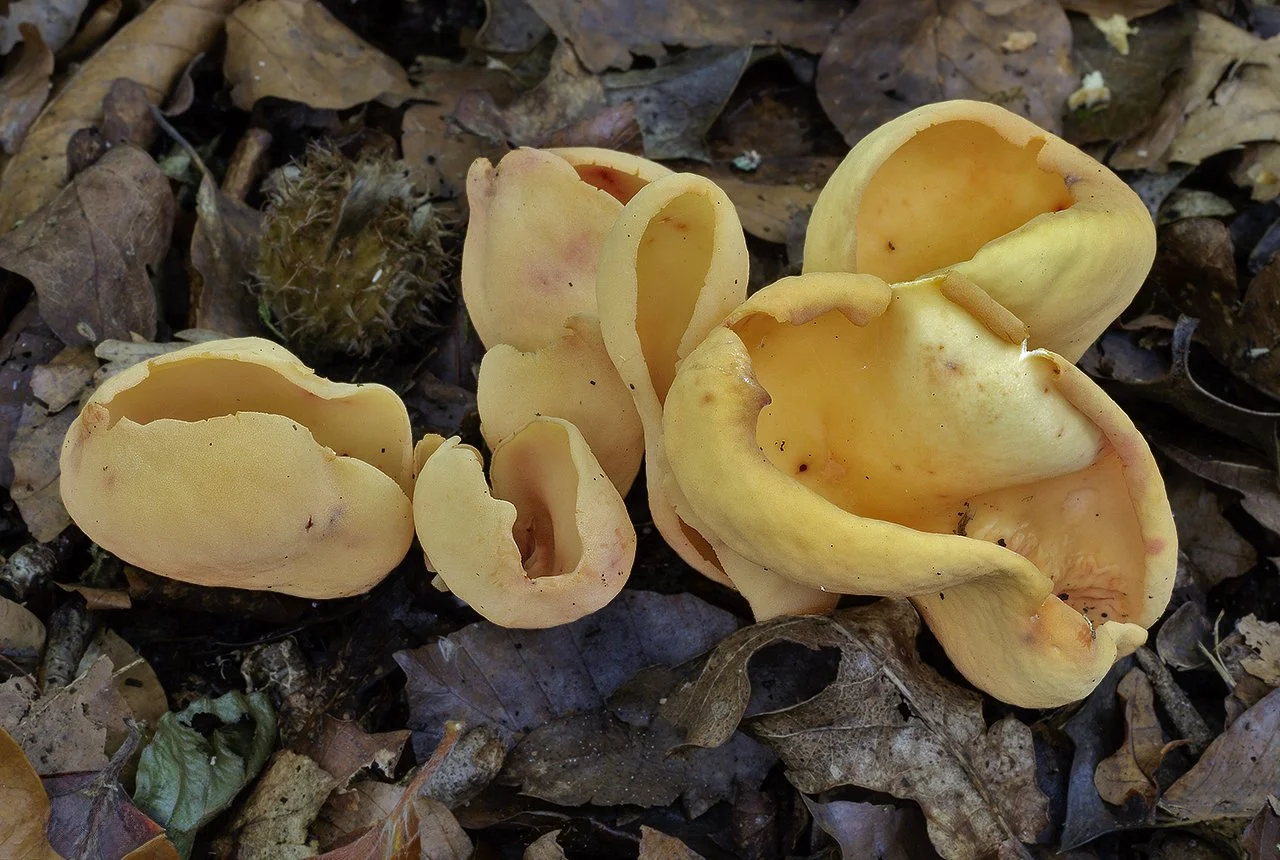

Favouring deciduous woodland habitats, though it may also occur beneath conifers in mixed stands, Otidea onotica, commonly called Hare’s Ear, typically emerges in small, clustered assemblages. Despite its modest dimensions, the species reveals itself readily when illuminated by favourable light: its delicate, ear-shaped ascocarps, suffused with pink-tinged yellow-orange hues, lend it a quiet yet unmistakable presence on the forest floor. In Britain, fruiting generally occurs from June through November, unfolding with the rhythm of the temperate woodland year.
References:
Buczacki, S., Shields, C. and Ovenden, D. (2012). Collins Fungi Guide: The most complete field guide to the mushrooms and toadstools of Britain & Ireland. London: HarperCollins, p. 606, fig. p. 607.
O’Reilly, P. (2016). Fascinated by Fungi – exploring the majesty and mystery, facts and fantasy of the quirkiest kingdom on earth. Llandysul: First Nature, p. 311.
Phillips, R. (2006). Mushrooms. London: Pan Macmillan, p. 364, fig. c.
Sterry, P. and Hughes. B. (2009). Collins Complete Guide to British Mushrooms and Toadstools. London: HarperCollins, p. 324, fig. p. 325.
www.first-nature.com/fungi/otidea-onotica.php [Accessed, 4th December 2025].
https://data.nbn.org.uk/Taxa/NBNSYS0000019678 [Accessed, 4th December 2025].