Sensu stricto …
In 2017 I made several visits to Warnham, West Sussex, to search for fungi and slime moulds. I am particularly drawn to cup fungi, and during an outing I photographed a representative selection of ascocarps growing on a fallen, heavily decayed hardwood log, likely Sycamore. Many brown cup fungi are notoriously difficult to identify with confidence based on macroscopic characters alone, so I collected a sample for assessment by Nick Aplin, the county recorder for ascomycetes.
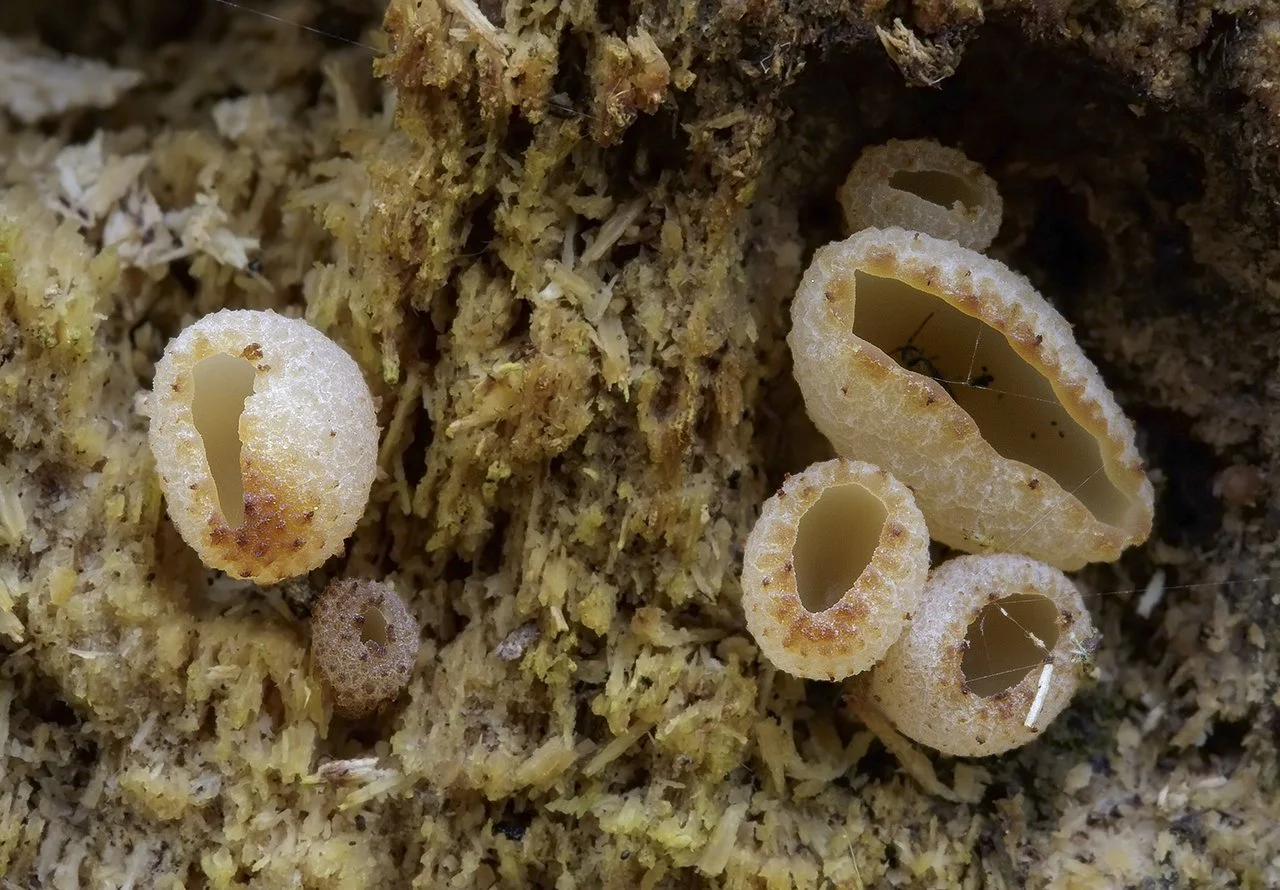
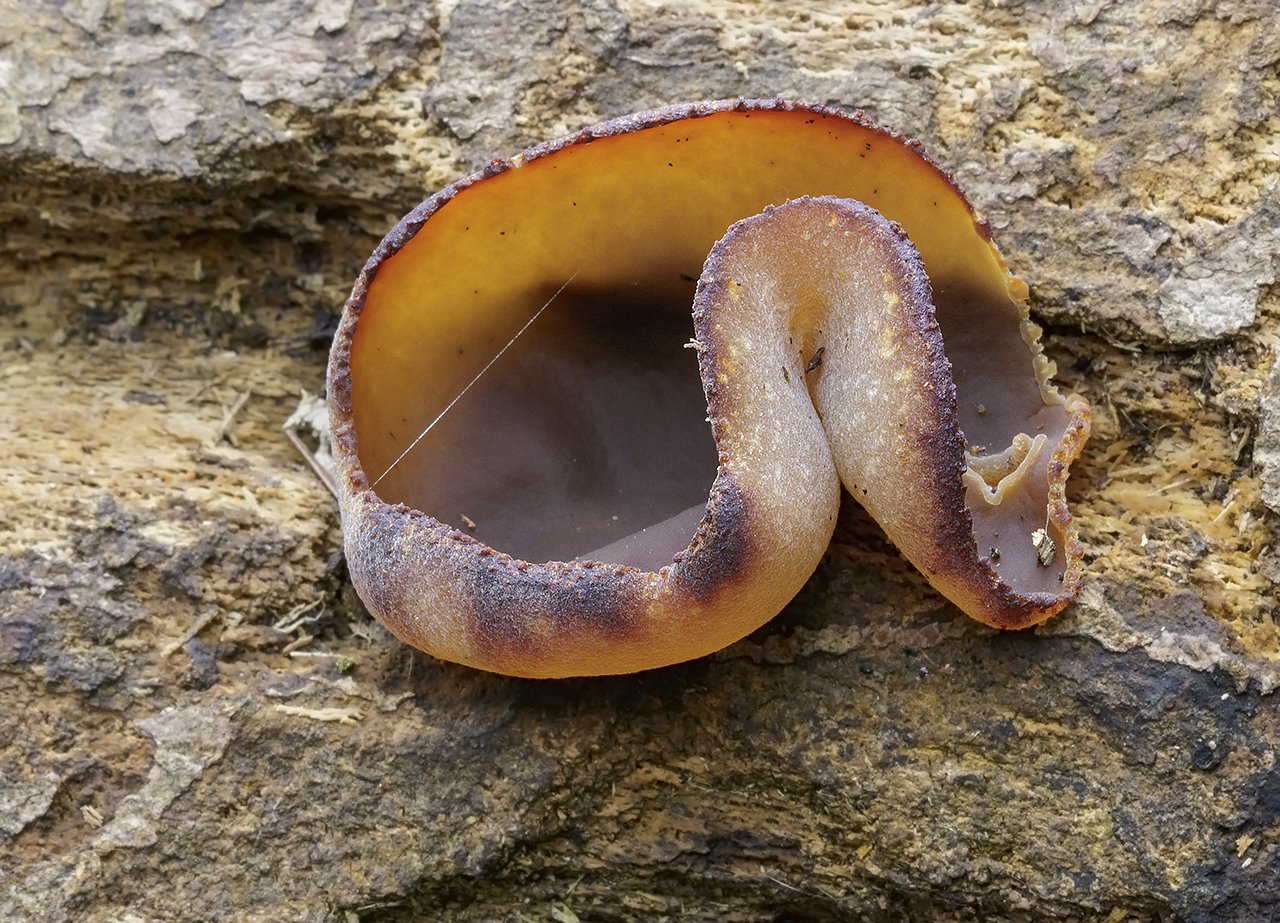
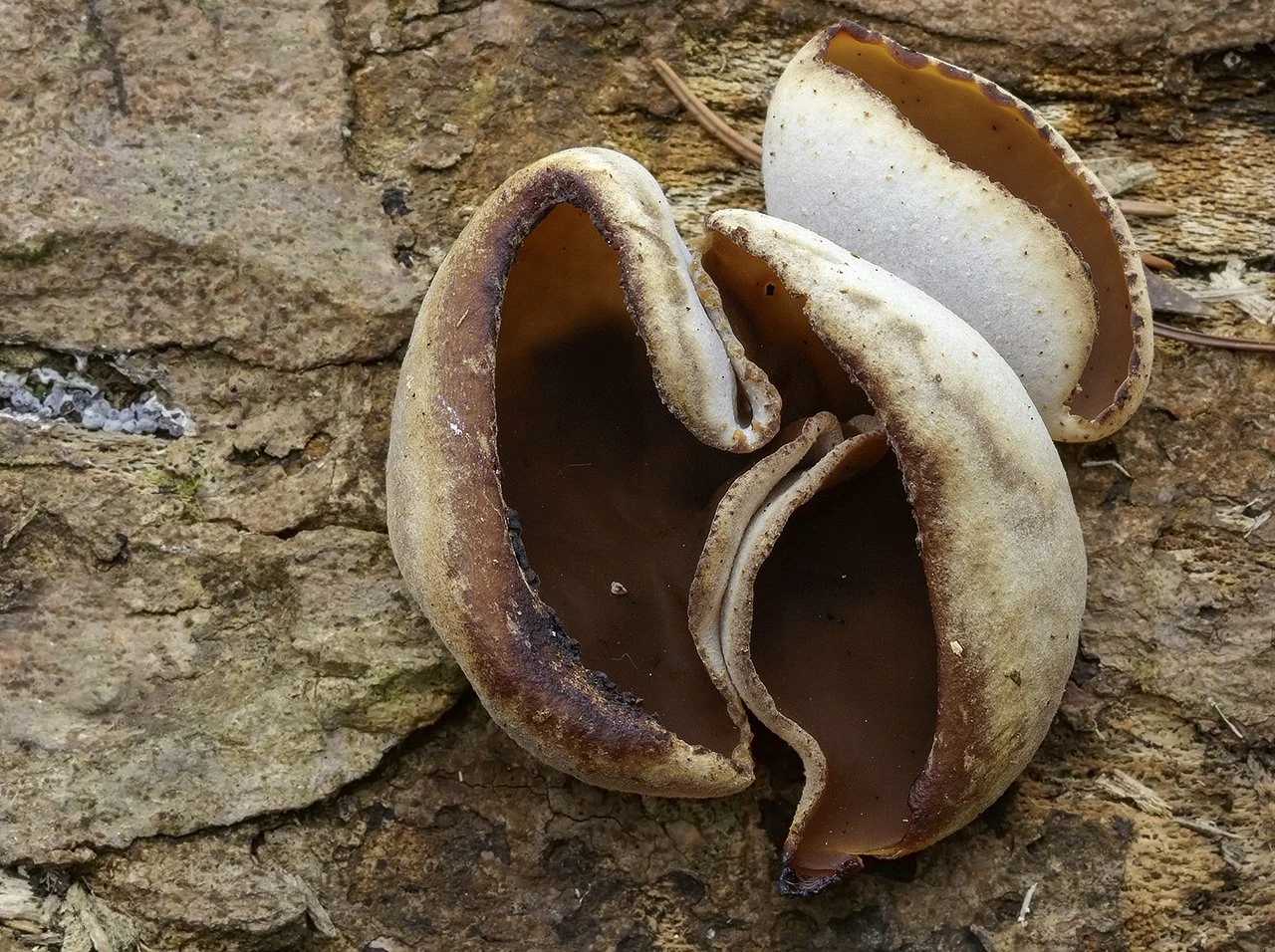
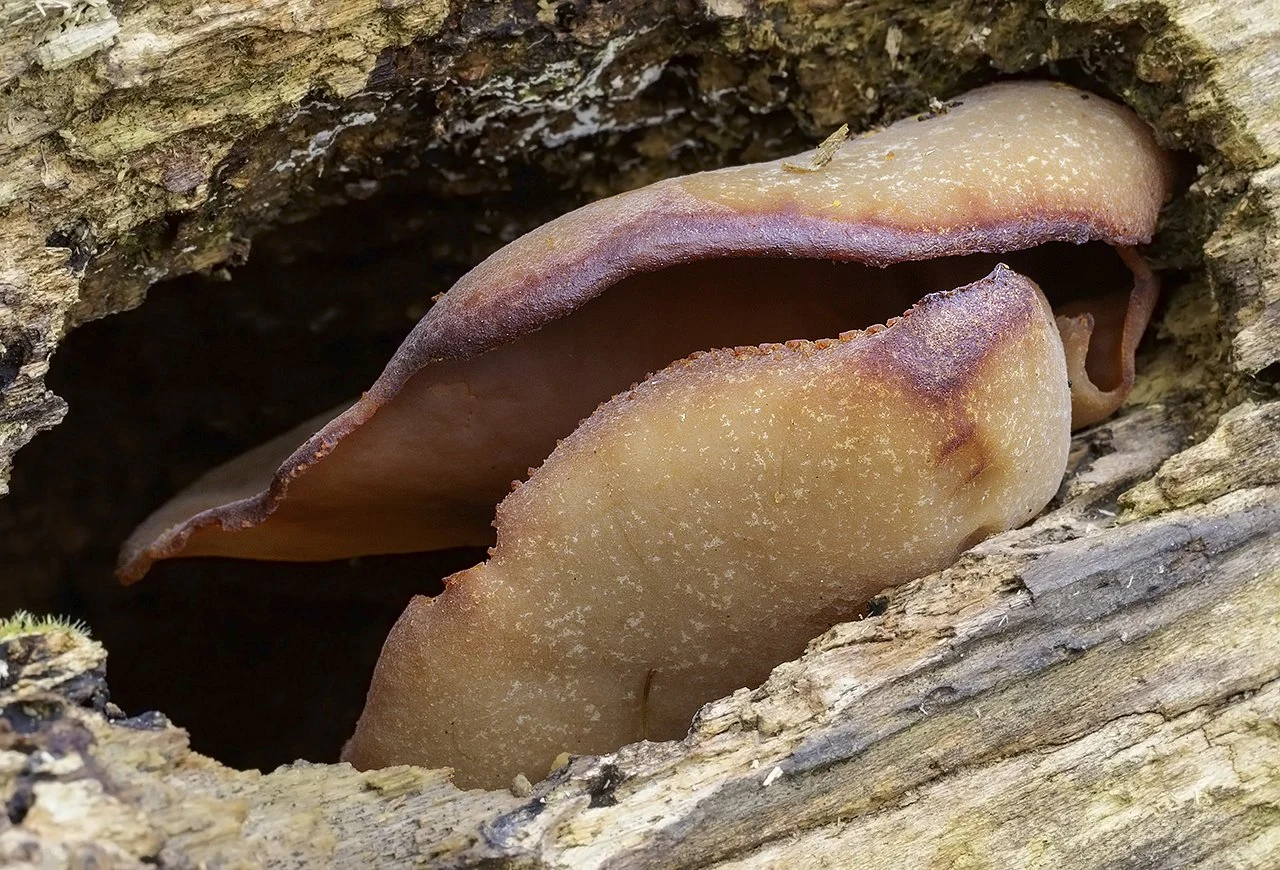
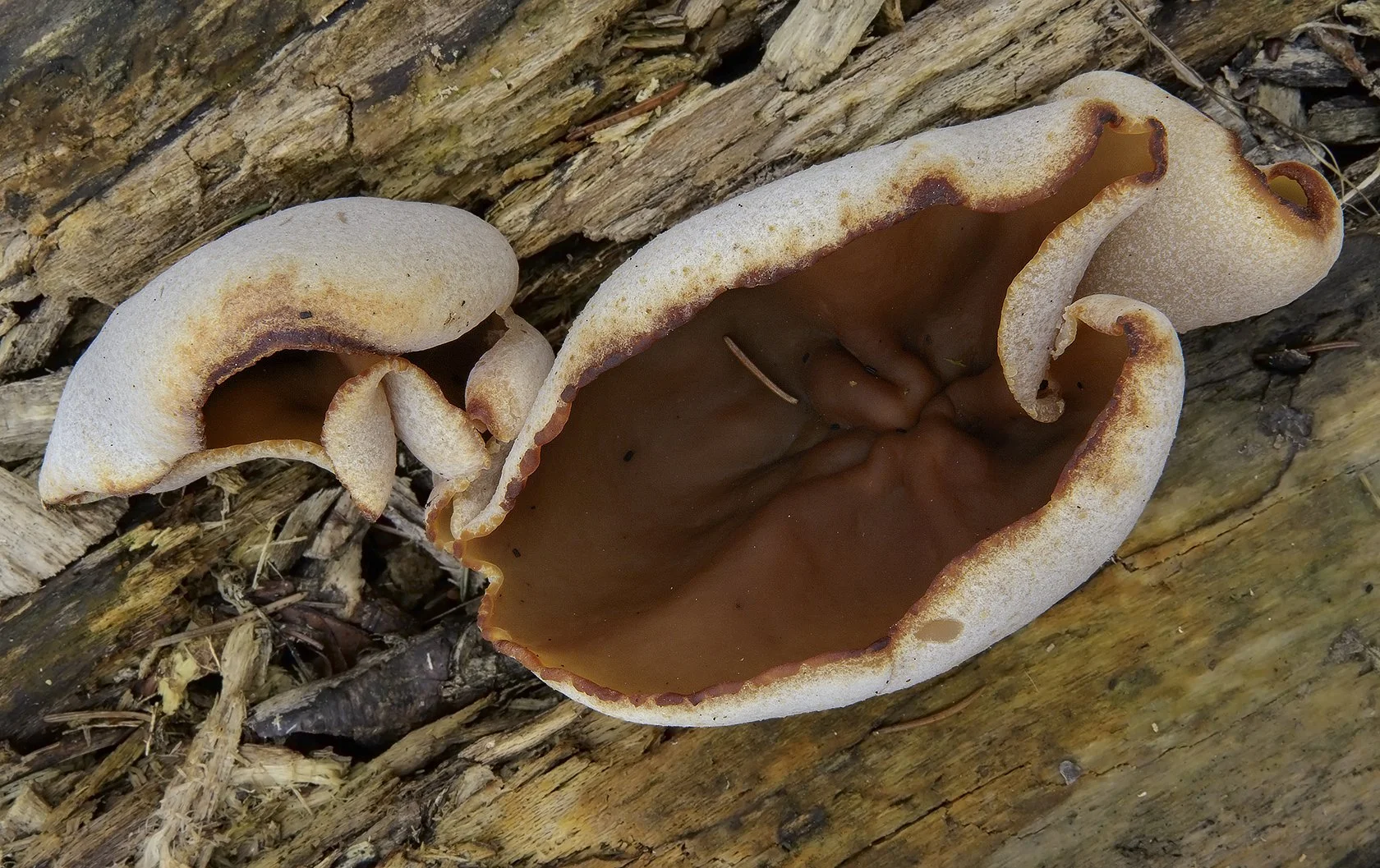
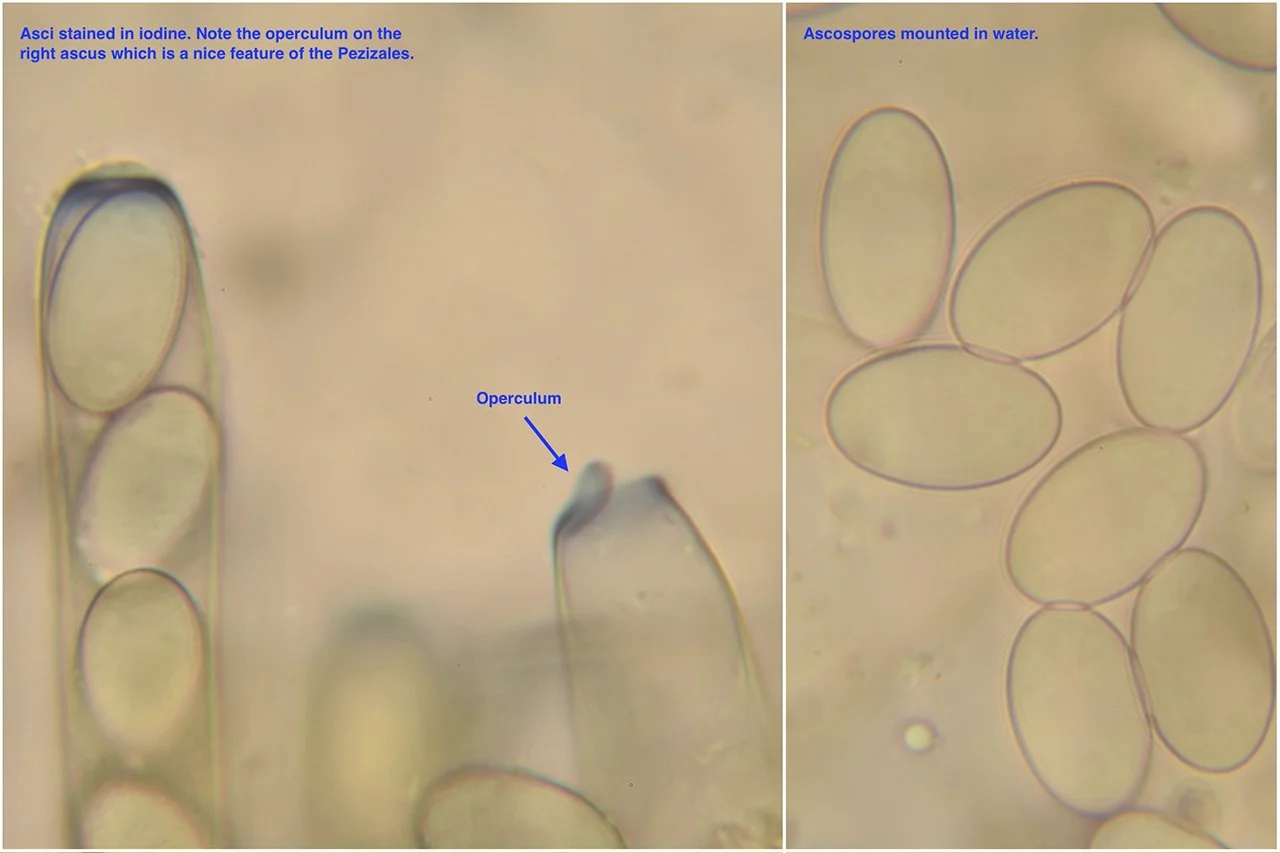
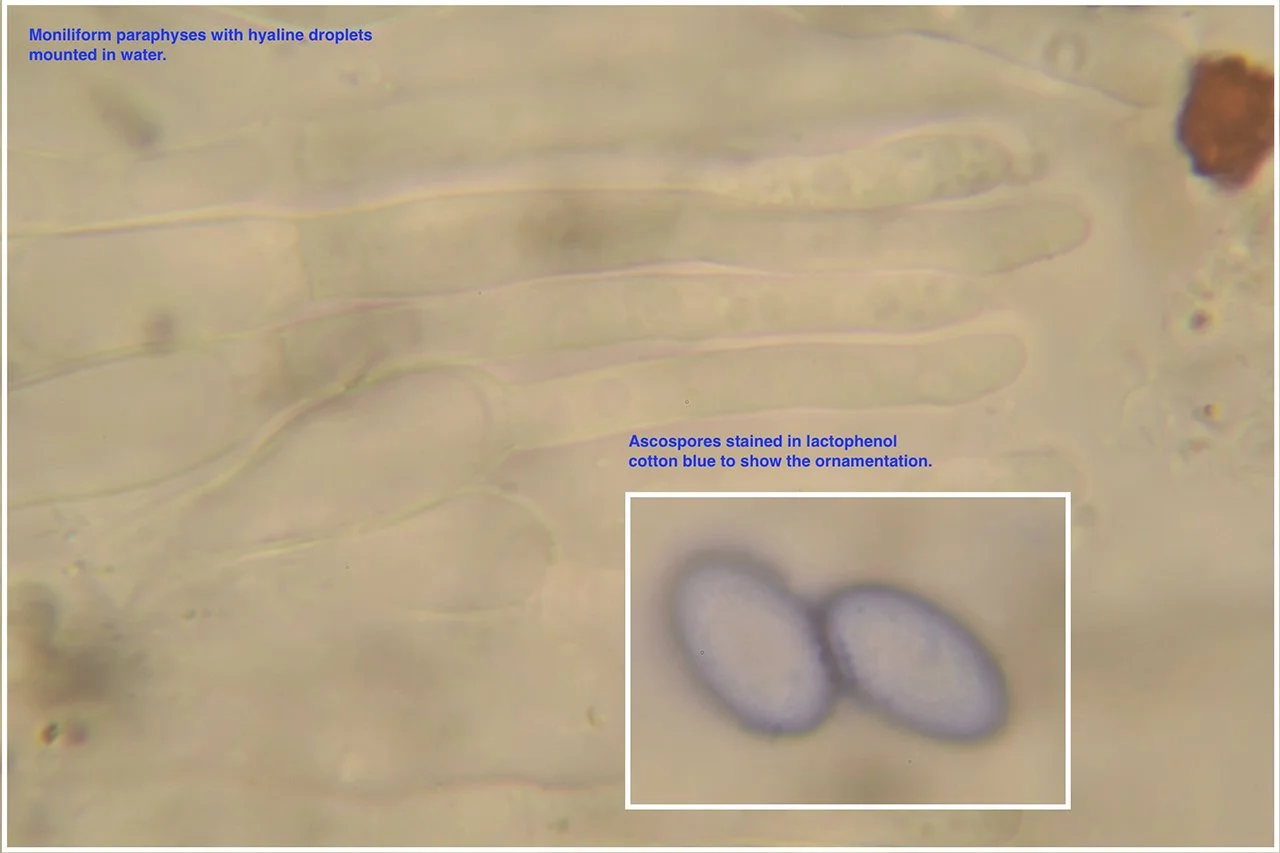
Nick confirmed that the material fits the current interpretation of Peziza varia (Pezizales: Pezizaceae), based on spore size and their characteristically slightly roughened ornamentation. The specimens can therefore be reliably assigned to Peziza varia sensu stricto, commonly known as the Layered Cup.
Peziza varia is a widespread saprotrophic species typically found on decaying hardwood, though it is occasionally recorded on conifer debris and nutrient-rich soil. Its ascocarps form shallow to deep brown cups that often become irregular or lobed with age. A key macroscopic feature is the conspicuously layered or zoned flesh visible in vertical section, hence the common name Layered Cup. The inner surface is smooth and medium to dark brown, while the outer surface tends to be paler and can appear slightly pruinose [frosted in appearance] when fresh. The species often appears in clusters or loose groups, especially in damp, shaded woodland environments.
Microscopically, P. varia is distinguished by its ellipsoid spores, usually containing small oil droplets, and by the fine, somewhat roughened spore surface visible under higher magnification. It is part of a complex of morphologically similar species, and identification frequently requires microscopic confirmation, as macroscopic variability and overlapping traits can make field determination unreliable if not impossible.
My thanks to Nick for his time, expertise, and for providing the accompanying photomicrographs.
References:
Sterry, P. and Hughes. B. (2009). Collins Complete Guide to British Mushrooms and Toadstools. London: HarperCollins, p. 322, fig. p. 323.
https://species.nbnatlas.org/species/NBNSYS0000019725 [Accessed, 9th December 2025].