Just why would you …
Auriscalpium vulgare, the Earpick Fungus, is highly specialised in its ecology, relying on decaying pine cones as its primary substrate. Its mycelium penetrates the cone’s woody tissues, breaking down tough structural compounds and contributing to nutrient recycling within coniferous forest floors. This habitat choice also explains its frequent association with particular pine species and its tendency to appear in the same areas year after year, provided suitable cones remain available.
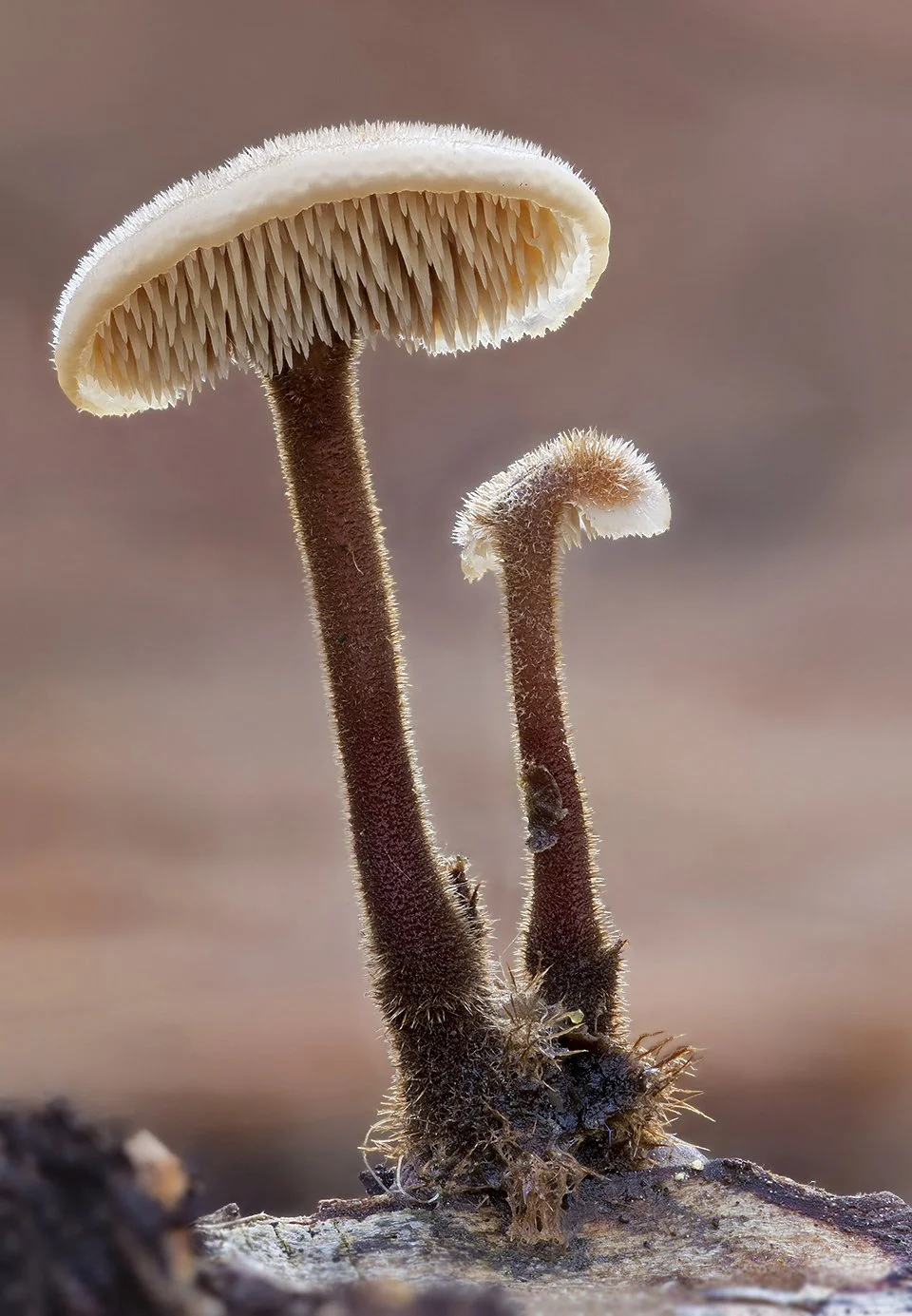
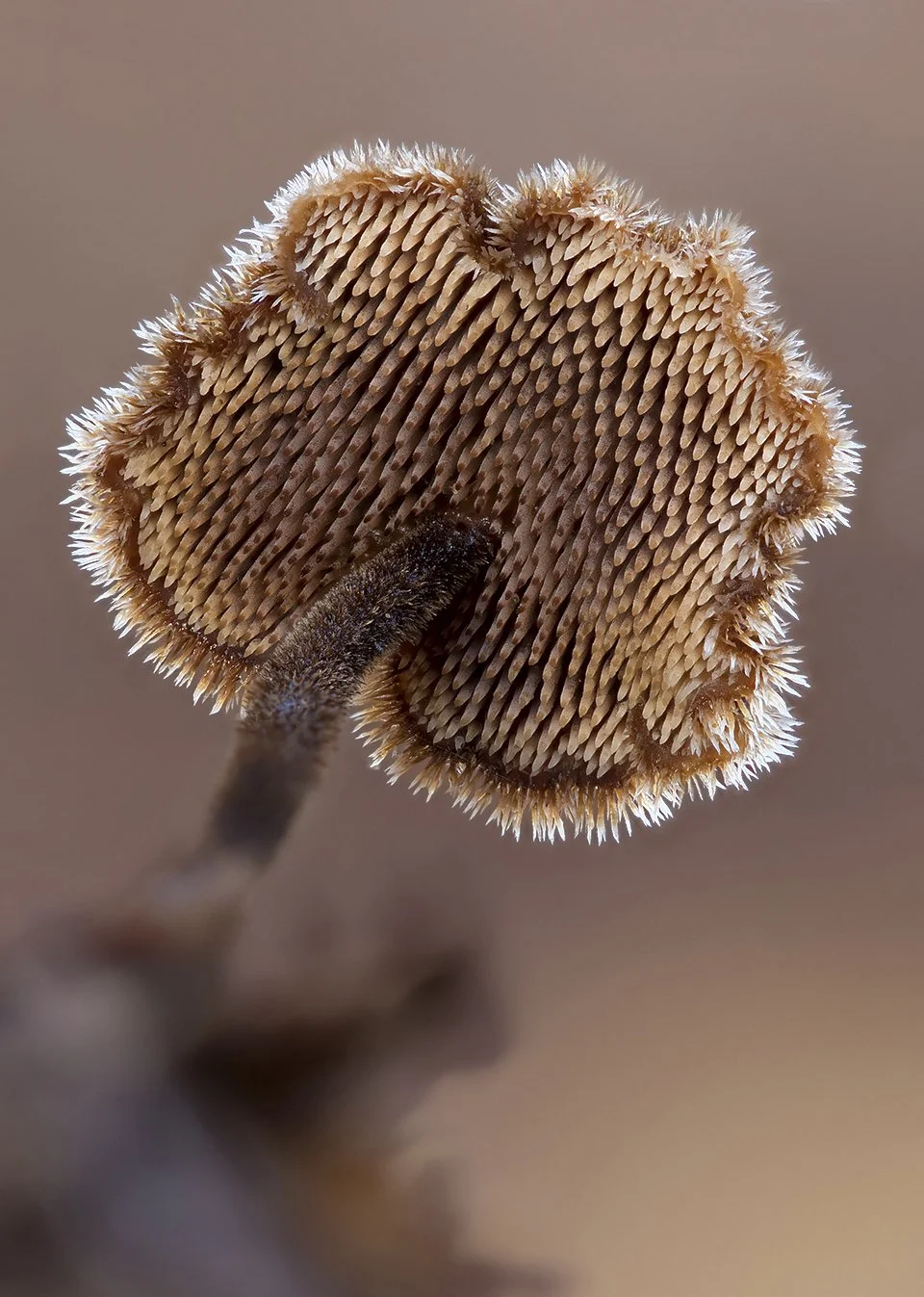
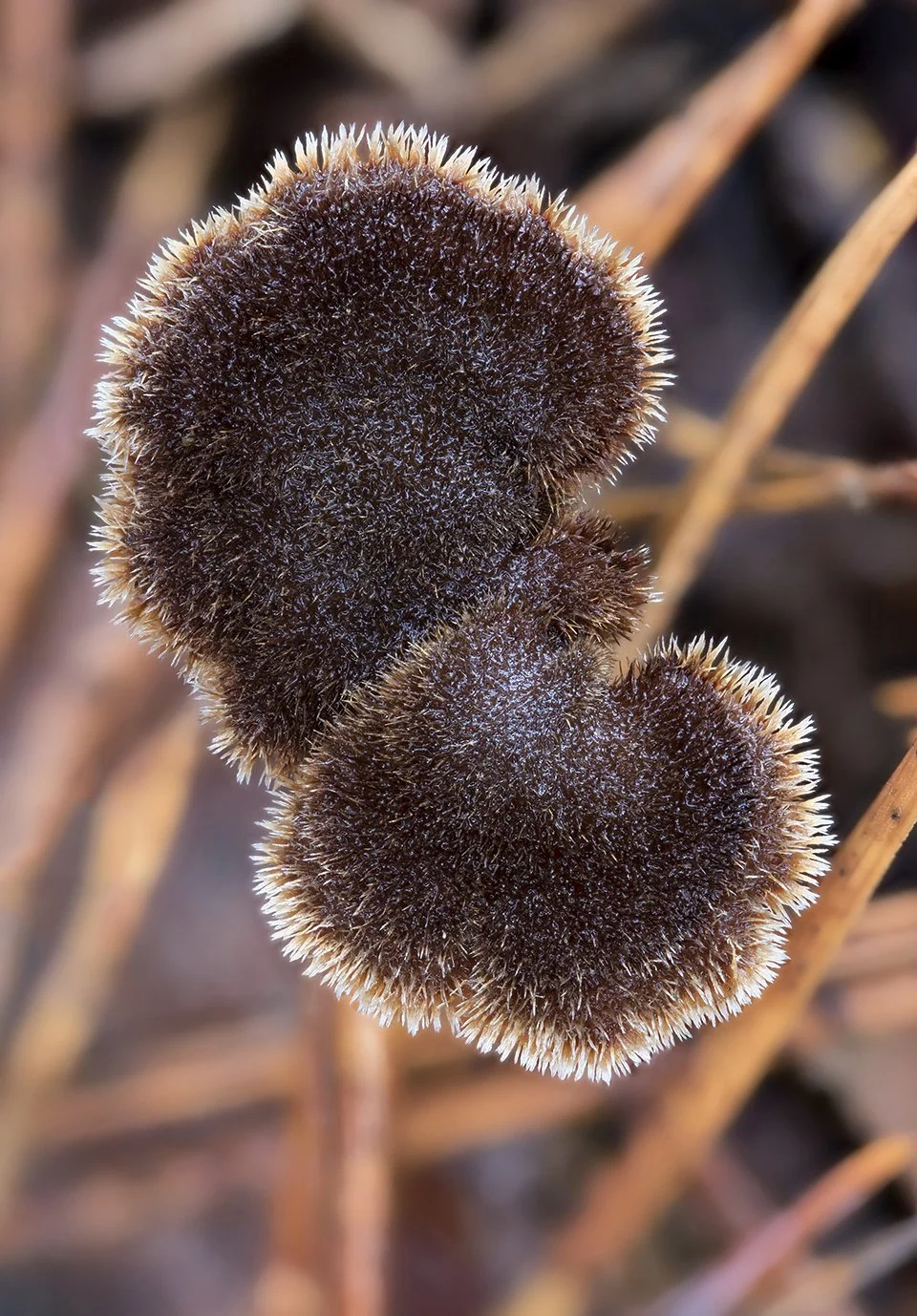
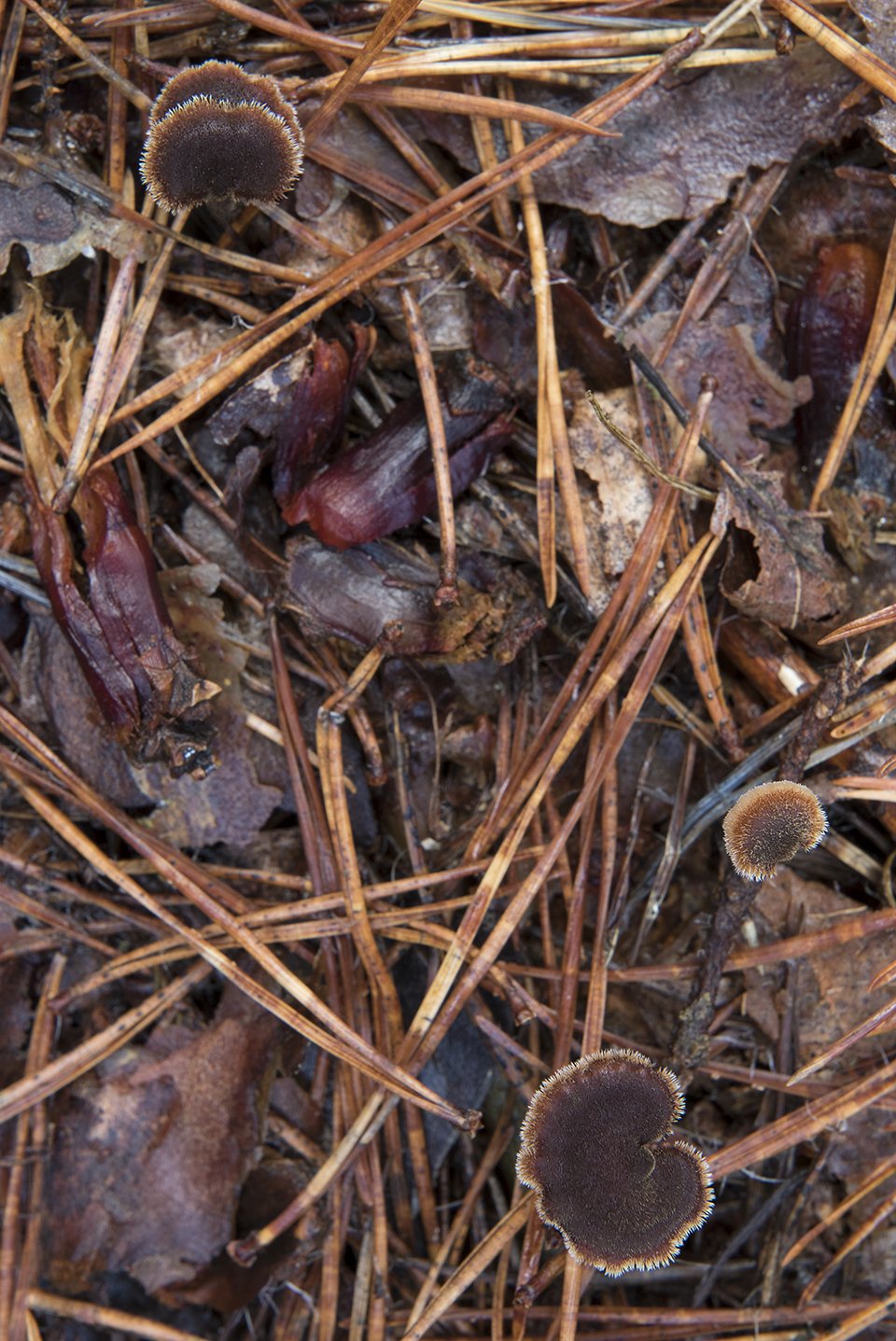
The fruiting bodies are small, tough, and darkly coloured, making them naturally well camouflaged. The cap often resembles a weathered fragment of cone scale or forest debris, while the spines on the underside serve as the spore-bearing surface. These morphological traits enable the fungus to withstand exposure, reduce moisture loss, and protect its spores until conditions are suitable for dispersal.
Despite being widespread, the species is notoriously difficult to spot. Even in known locations, individuals often escape notice because they grow low to the ground, are partially obscured by pine needles, and blend closely with their substrate. As a result, locating A. vulgare often requires slow, careful searching and familiarity with its characteristic form and preferred microhabitats.
References:
Buczacki, S., Shields, C. and Ovenden, D. (2012). Collins Fungi Guide: The most complete field guide to the mushrooms and toadstools of Britain & Ireland. London: HarperCollins, p. 470, fig. p. 471.
Kibby, G. (2017). Mushrooms and Toadstools of Great Britain & Europe, Volume 1, pp. 42-43.
Sterry, P. and Hughes. B. (2009). Collins Complete Guide to British Mushrooms and Toadstools. London: HarperCollins, p. 280, figs. p. 280-281.
https://www.first-nature.com/fungi/auriscalpium-vulgare.php [Accessed, 7th December 2025].