Mixed Identity
Gynandromorphism
In humans, sex is first established by the sex chromosomes, which determine whether the reproductive organs develop as testes or ovaries. These organs then produce hormones that circulate through the bloodstream and guide the development of the rest of the body. In this system, the sex chromosomes found in most body cells do not directly control whether those tissues develop male or female characteristics. In insects, however, sex development works very differently.
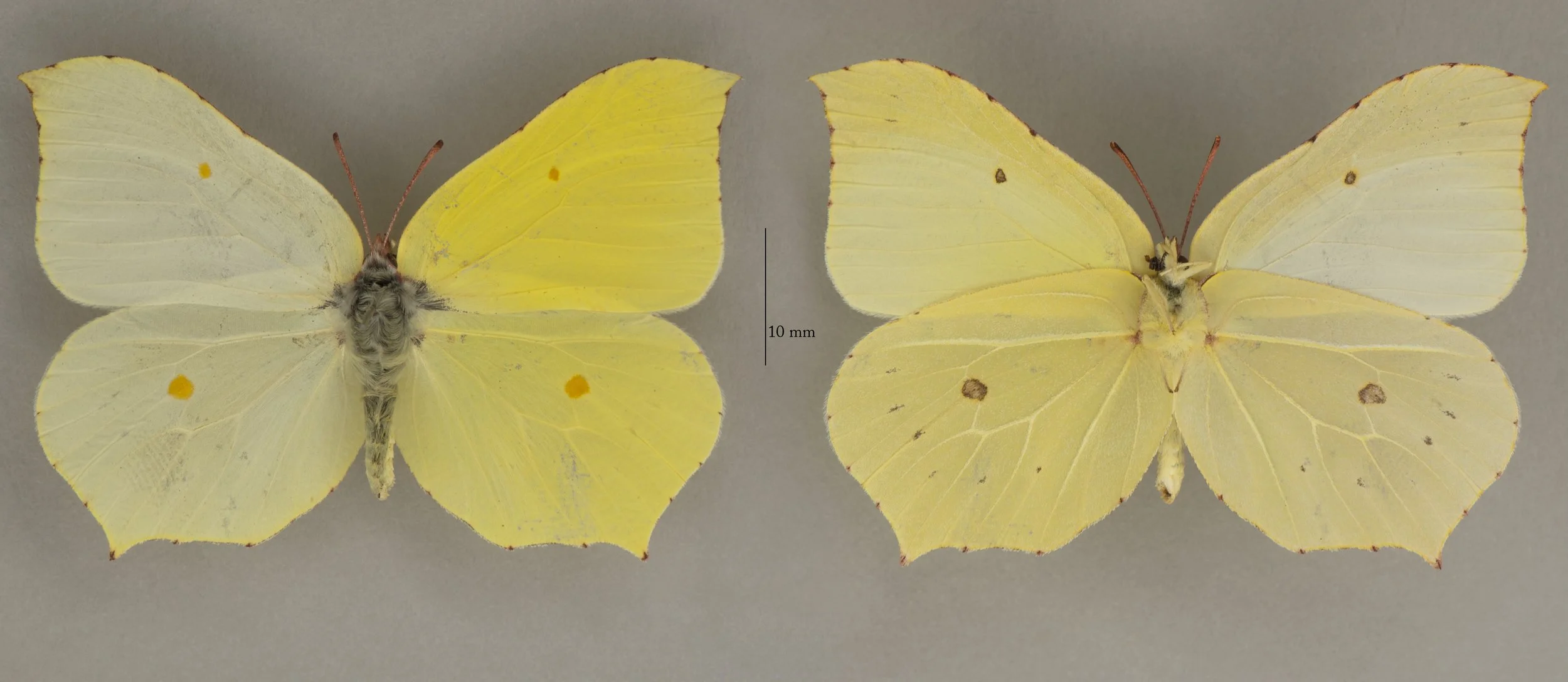
In the early cellular developmental stages of butterflies the sex chromosomes present in every cell decide and control the sex of that particular part of the body. The sex of a butterfly is initially determined by the number of Z chromosomes present in the zygote, the fertilized ovum. If two Z chromosomes are present it will be a male; if only one it will be a female. The zygote subsequently divides and each of these cells will go on to develop into right and left sides of the body. At every cell division there is always a very small possibility of a Z chromosome being lost in the process, causing an imbalance between the autosomes [any chromosome that is not a sex chromosome] and remaining sex chromosome. The resulting cell left with just one Z chromosome changes to being female in character and all further development is along those lines. An individual organism that contains both male and female tissue is termed a gynandromorph. This is the most commonly accepted method by which gynandromorphs arise.
Gynandromorphism in the Lepidoptera is most often associated with wing coloration. Should these features appear combined on the same wing as a mosaic it is referred to as a mixed gynandromorph. But sometimes an insect is bisected, such as the Brimstone, Gonepteryx rhamni individual shown, with one side of the body including the wings being either entirely male or entirely female. These remarkable and rare individuals are termed bilateral gynandromorphs. In many species of butterfly where extremes of sexual dimorphism occur, spectacular gynandromorphs can sometimes arise, particularly where one half is male and the other female.
My thanks to Alec Harmer for his assistance with this article and to Oxford University Museum of Natural History for permission to use the above image.
References:
Harmer, A.S. (1999). Variation in British Butterflies. Lymington, Hampshire: Paphia Publishing Limited.